Against a backdrop of growing medical needs and often restricted access to healthcare, Palestinian healthcare facilities face numerous challenges. Emergency services are under particular strain, whilst opportunities for specialist training remain limited.
In response to this situation, Mehad is launching the AMANE project (Improving Emergency Medicine in Nablus through Education) in partnership with An-Najah University and with the support of the French Ministry for Europe and Foreign Affairs and the French Consulate-General in Jerusalem.
The aim is to strengthen the skills of future healthcare professionals and bring about a lasting improvement in the management of medical emergencies in Palestine.
Training the A&E doctors of tomorrow
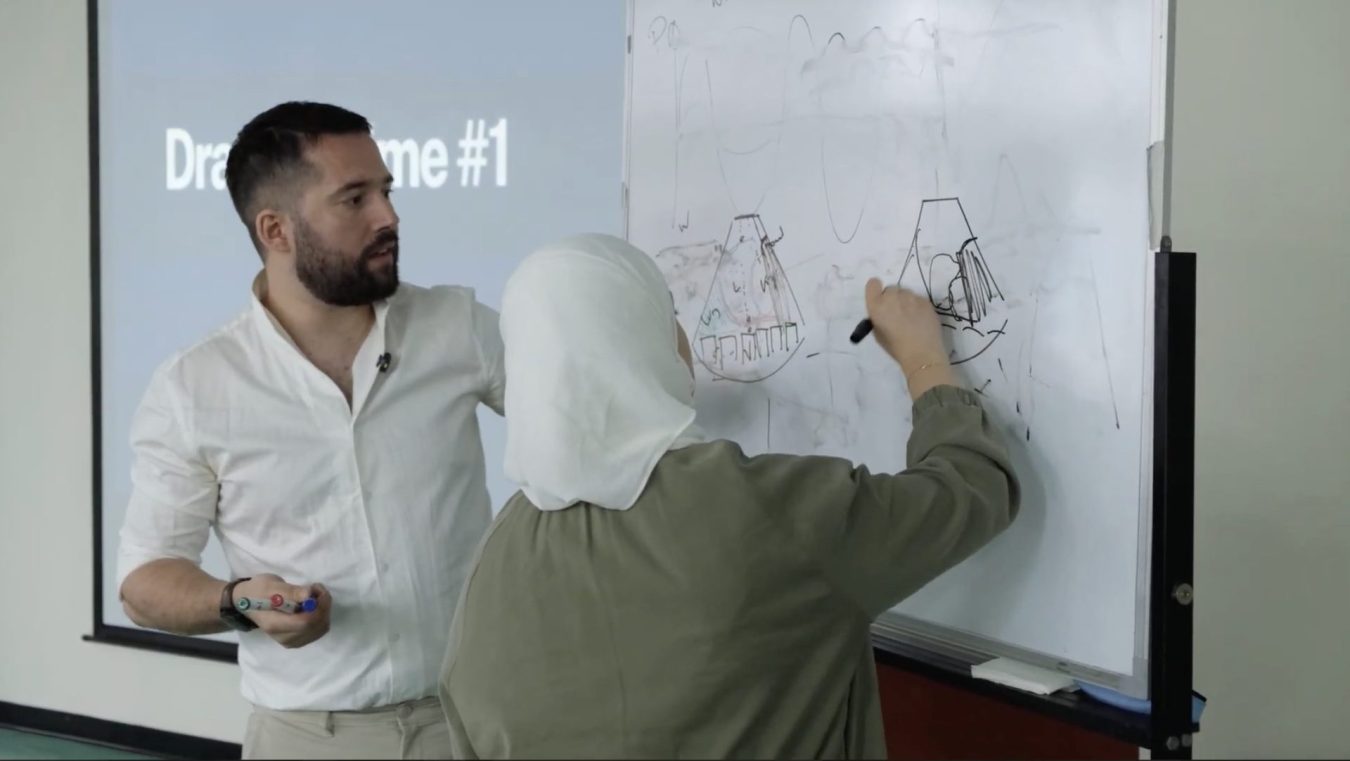
The project will support An-Najah University in developing a structured curriculum in emergency medicine. Nearly 400 medical students will benefit from new modules combining theoretical teaching, simulations and practical workshops.
AMANE will also enable the introduction of emergency ultrasound into the university curriculum. Fast, portable and particularly well-suited to resource-limited settings, this technique is now an essential tool for the diagnosis and management of patients.
The project therefore involves training 48 students and healthcare professionals, as well as providing ultra-portable ultrasound scanners for teaching purposes.
Strengthening local capacity in a sustainable manner
In addition to training students, AMANE aims to lay the foundations for the sustainable development of emergency medicine in Palestine.
Six lecturers from the faculty will receive support in university teaching methods with a view to improving the quality of teaching. The project will also contribute to the development of a future specialisation degree in emergency medicine, scheduled to launch at the start of the 2026 academic year.
Exchanges with French universities and the development of new academic partnerships will complement this initiative.
Through this project, Mehad is continuing its commitment to strengthening health systems by investing in one of their most valuable resources: the women and men who provide care.