As the humanitarian crisis in Syria continues, and despite the hopes raised by the recent political changes, Mehad is stepping up its commitment to guaranteeing access to healthcare throughout the country. MHD Jamal Kaby Koly, Head of Syria Operations, talks about Mehad’s role before and after December 2024, and the outlook for the future.

Before December 2024: a key role in northern Syria
What was Mehad’s role in the Syrian healthcare system before 8 December 2024?
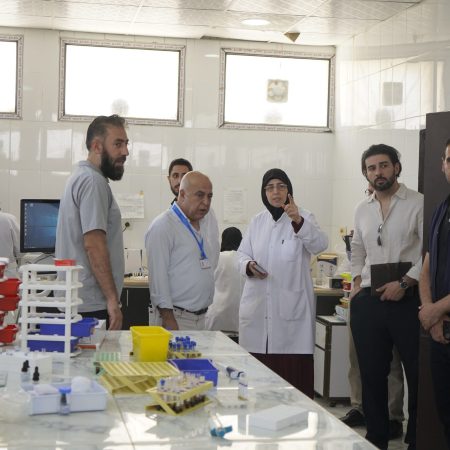
MHD Jamal Kaby Koly: Before 8 December, Mehad was playing a key role in strengthening the healthcare system in Syria, particularly in the north-east and north-west. Since the start of the conflict 14 years ago, Mehad has proved its worth by developing structuring health programmes and establishing itself as a key player in the medical sector. The organisation ran primary healthcare centres and strengthened specialist services, with a focus on dialysis centres, a blood bank and a reference laboratory, particularly in Raqqa and Deir ez-Zor.
Mehad was also involved in improving the health system, leading the fourth phase of the HERNES 4 project, which aimed to strengthen primary and maternal care, training for health workers and research. The organisation played a central role in coordination platforms to improve access to medical services.
Its commitment also included community, nutritional and mental health support, with targeted services for children and pregnant and breastfeeding women, as well as psychosocial programmes for people affected by the conflict.
A turning point in December 2024: widening access to care
What new initiatives did Mehad put in place after 8 December 2024?
MHD Jamal Kaby Koly: While maintaining its historic actions, in the face of increasing humanitarian needs, Mehad has intensified its coordination with the Syrian authorities to extend access to care throughout the country. A major project has been the opening of an official presence in Damascus, making it easier to obtain authorisation to operate throughout Syria.
At the same time, Mehad has expanded its involvement by developing mobile health services. Two mobile clinics have been deployed in Raqqa and Tabqa to support displaced populations, while another clinic in Aleppo has been commissioned to cover three strategic areas. The organisation has also funded the operation of two primary health centres in Aleppo and opened a new centre in a rural area, thereby increasing access to healthcare for vulnerable populations.

Mehad’s next challenges in Syria
What are Mehad’s future plans?
MHD Jamal Kaby Koly: We have drawn up new response plans and project proposals to meet growing needs while attracting new donors. The aim is to guarantee sustainable funding for our actions and to adapt our interventions to the realities on the ground.
We remain committed to developing sustainable solutions and adjusting our approach to the humanitarian challenges in Syria. Our priority is to ensure continuity of care, expand our services and innovate to better meet the needs of vulnerable populations.
Mehad remains committed to ensuring accessible healthcare for the most vulnerable Syrian populations.