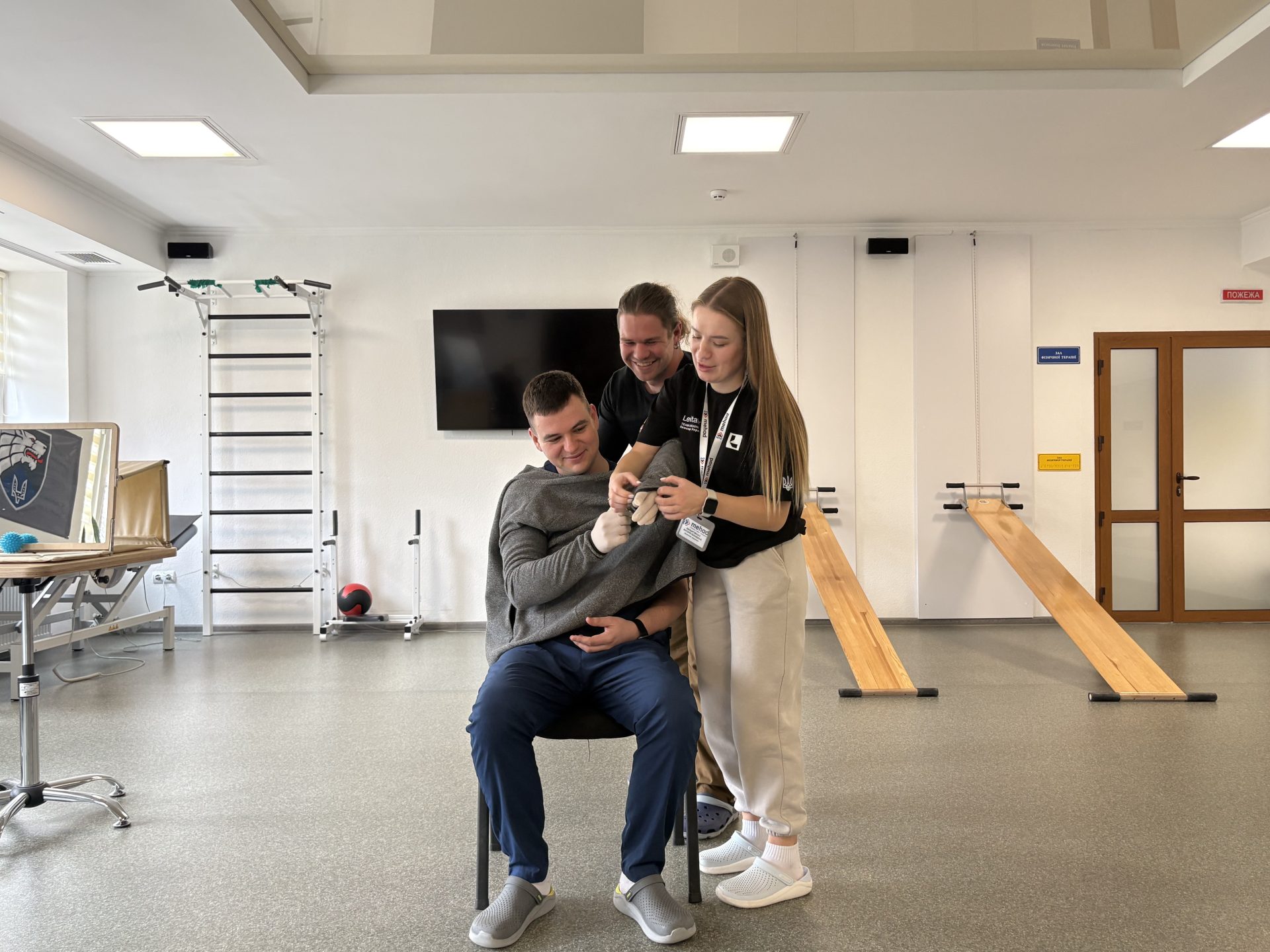
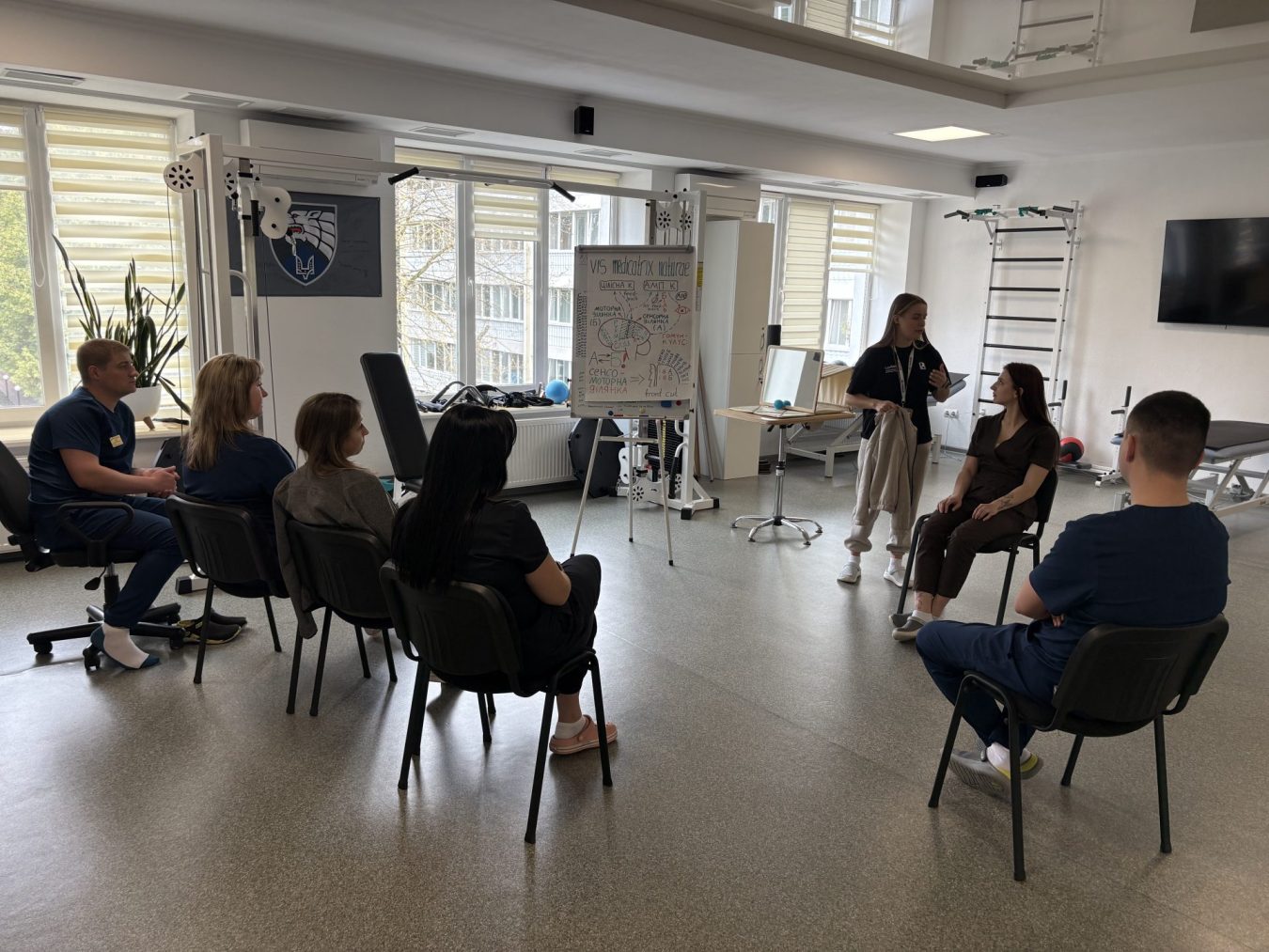
As part of its rehabilitation project in Ukraine, Mehad’s teams are continuing their capacity-building work with healthcare professionals. On this occasion, our physiotherapist and psychologist led a joint training session on the management of phantom limb pain, a common issue among amputees.
This training course enabled participants to deepen their understanding of the mechanisms underlying phantom pain and to discover appropriate therapeutic approaches to improve the support provided to patients throughout their rehabilitation journey.
A common problem among amputees
Since the start of the war, many patients treated in Ukrainian rehabilitation centres have suffered complex injuries, some of which have required amputation. In addition to the physical consequences, these patients often have to cope with phantom pain, which can hinder their recovery and their return to everyday life.
Current research shows that this phenomenon is linked to the way in which the brain continues to process information associated with the missing limb. Following an amputation, the brain continues to send and receive signals relating to the missing limb, without receiving the usual sensory feedback, which can cause painful sensations.
A multidisciplinary approach to providing better support for patients
In order to improve the management of this complex issue, the training session brought together healthcare professionals to adopt a multidisciplinary approach combining physical rehabilitation and psychological support.
Participants gained a deeper understanding of the mechanisms underlying phantom pain, methods for assessing symptoms, and various evidence-based treatment strategies.
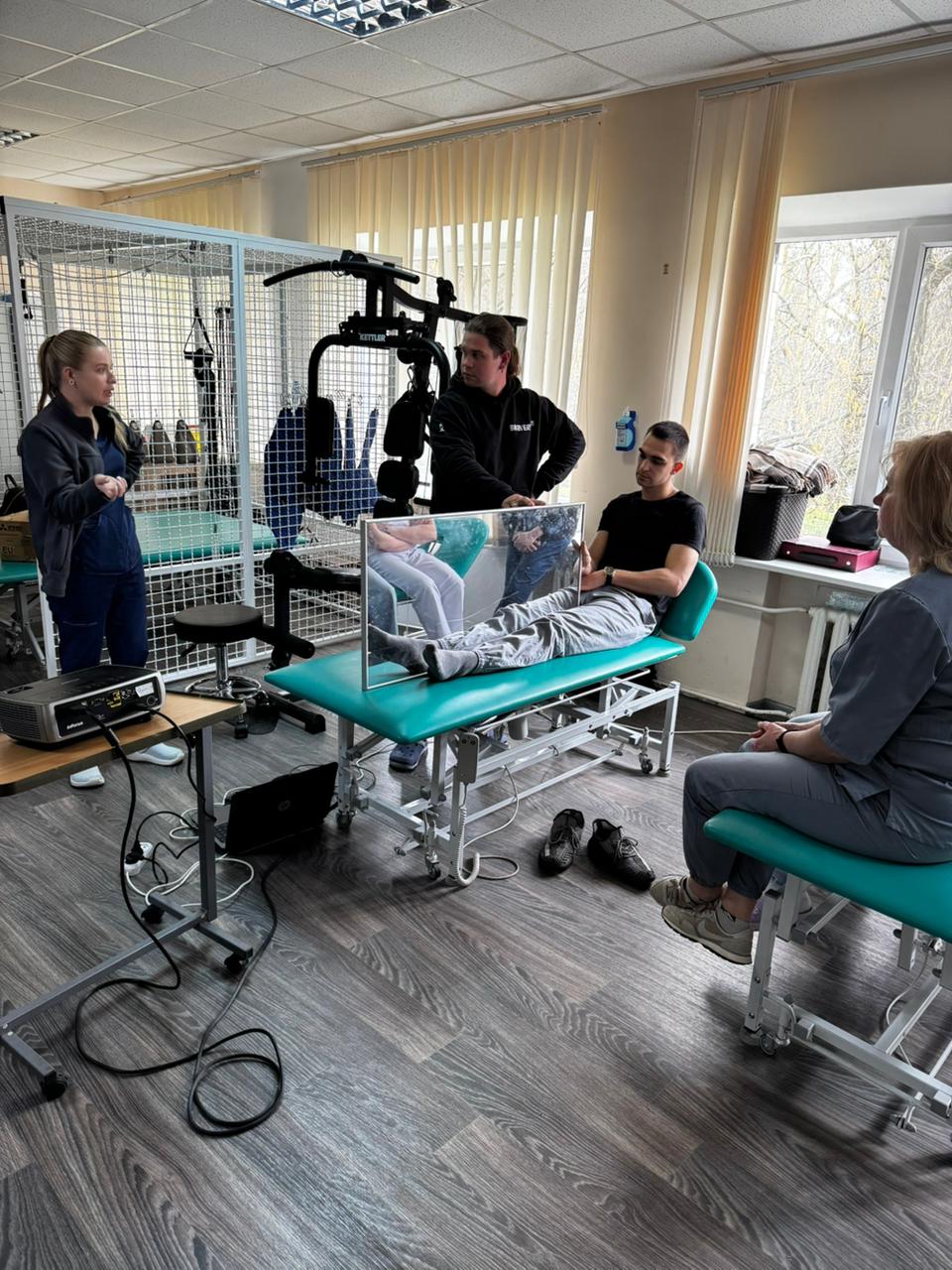
Among the tools presented was mirror therapy, a technique that uses the reflection of the intact limb to create the visual illusion that the amputated limb is still present. This approach helps to re-establish the connection between movement, perception and visual information, which in some cases can reduce the intensity of pain.
Participants also learnt about the use of limb models and prosthetic replicas – tools that provide the brain with visual and sensory information to aid adaptation following amputation.
Building the capacity of healthcare professionals in a sustainable manner
Through this training programme, Mehad is continuing its commitment to strengthening the skills of Ukrainian healthcare professionals with a view to bringing about a lasting improvement in the quality of rehabilitation services.
By enhancing the knowledge and practices of healthcare teams, this initiative helps to improve the care provided to amputees throughout their rehabilitation journey.